Monday, September 5, 2022

The Distant Home (1992)


It's the 13th birthday for twins Sally and Bobby Harrison and things seem fine, until a road accident sends Sally to the hospital. The staff quickly realise something is wrong. This new patient's biology doesn't match anything human-She can only be...an alien! They try and keep her in for unfriendly tests, but Bobby rescues her, and the siblings escape to neighbour Miss Webster, who is revealed to be an alien herself. She reveals an alien conspiracy from beyond the stars, that Sally is at the heart of. It seems only quick thinking from everyone can save the Earth, maybe even the galaxy...


The Distant Home is a Aussie kids' movie with a sci-fi twist, from our golden age of TV-The 90s (+ early 2000s). Its plot promises so much high concept stuff that I was really curious to see how a movie on an Australian budget (a kids' production, no less!) would handle it! And I hoped the movie would be good, for patriotic reasons, but also because it just sounded fun! Well I can say this film satisfied on one front at least!


We open with a confusing prologue set near the end of the film (which admittedly fits better on rewatch). There's a slight level of eerie with the dark yellow sky, and just enough oddness to get you curious. Once things flash back, we get off to a good start, as the movie introduces its characters and setting. No sooner than birthday girl Sally enjoys her new skates, she's hit by a car.

The family act quickly and take her to get help. I hope you like hospital settings, because this is where the film spends much of the first hour! Yeahhh, this is the area the film doesn't live up to. We get some good scenes here, and the plot builds nicely, but it feels like only the first act shoulda been here, not most of the film. This is where things hit a bit of a lull for a period.
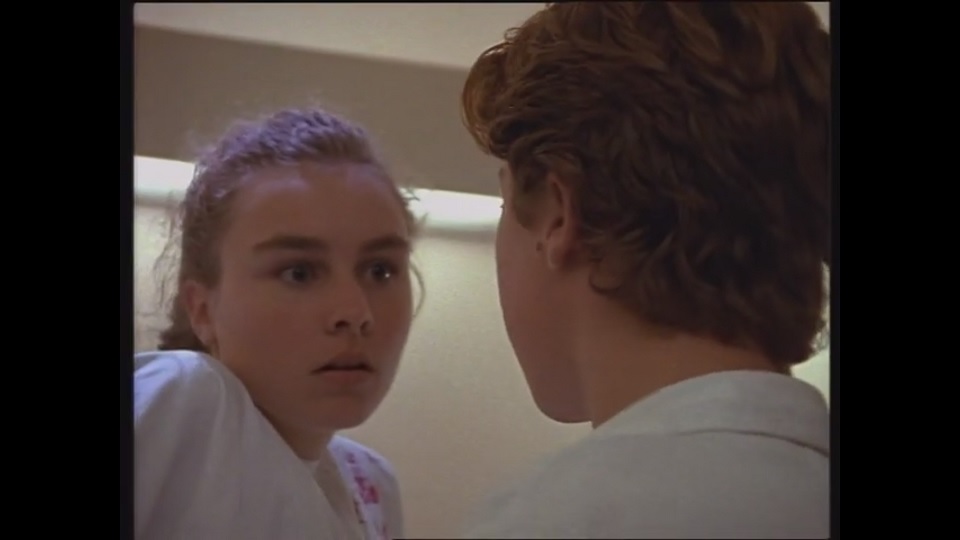

Once the film finally leaves the hospital, things pick up. It feels like the movie's finally allowed to deliver what it promised. And it's not bad. The backstory is pretty good, and there are some nice details.

As for how much time the movie spends in mundane surroundings, this is manageable. On one hand it could be annoying, for obvious reasons. But on the other it is nice seeing a movie that's both out of this world and down-to-earth! As long as it's done well, mind you. The Distant Home just barely skirts by. It tried my patience with that whole mid-section, but by the end it does live up to expectations the DVD blurb gives.


Our two protagonists are nice kids, going to bat for each-other, with a minimum of bickering. Bobby's never sore that his sister's an alien, and to her credit Sally never considers melting anyone's brains. Despite their ages, they do contribute to the action, instead of just sitting passively while the adults do all the hard work. Their parents are ok, and not too skeptical, while their aunt is a tenacious lawyer, who really gets shit done! The plan she and the kids come up with is pretty neat, and fun to see play out.


Miss Webster is a nice old granny, with a secret. It turns out she's a galactic commando, keeping watch over Sally. She gives the kids enough credit to let them in on the action, but still keeps tight-lipped. Until Sally realises that as princess she outranks Miss Webster, who immediately defers to the girl, even calling her ma'am. This means Sally cuts right through the grown-up 'This isn't the right moment to tell you' crap and gets a straight answer then and there!


The villains for much of the films are the hospital staff, namely a shifty doctor. He's amusingly menacing, with lines like "Hello Bobby. I need your blood." and his dialogue about 'free agents' sounds more like an Orwellian authority figure. One of the leads gets a great comeback after the doc gives one too many false assurances: "Trust me."-"You're a doctor?".

Then there's a pair of feds who show up, subject everyone in sight to polygraphs (then swear them off once they don't get the desired results), and generally cause trouble. As do a swarm of reporters, leading to some funny moments. If you're annoyed at the pushy press, watching this will make you feel better!


And last up are the weirdly named Earthsoids. No idea why they're named that when they're not from Earth. They too take the form of little old ladies, but pack a mean punch. Their weakness is pretty convenient and easy, but makes sense, and it's fun watching them get their asses kicked.


The climax is fairly small-scale, but enjoyable. The movie ends on an alright point, although unsatisfying in some ways. It's a bit open ended, but conclusive enough. Though there's no comeuppance for the various human villains. It would've been nice to see a follow-up to continue the story in the stars, but let's be real, there's a reason the film ends where it does.


The effects do their best, but are pretty cheap, like a cup glued to a dishplate representing an alien gizmo. There are some neat looking goggles, and enough pairs to go round. Then there are all the CG effects, which are...primitive, to say the least! The yellow sky isn't exactly convincing, but it's forgivable for a movie like this, and looks cool anyway!

The visuals for the good aliens' true forms is good, if a bit goofy, and the blinding light shows juuuust enough off, without showing too much and spoiling the effect. The bad aliens' true form is a bit dull, but barely seen. And last up is a funny montage of outer space action, the only time in the entire movie where Distant Home really gets cosmic. It...looks how you'd expect! It does run the risk of being special effects nonsense, but I appreciate the thought.


Just because the film's pretty low on fantastical imagery, doesn't mean it's a slouch directing. The hospital chase is filmed from a neat angle/location, and there are cool visuals, like the evil old ladies walking through an almost apocalyptic looking suburb, or the serene alien princess at the end.


The cast do a good job all round. Marnie Reece-Wilmore and Dene Kermond are nice young leads, and don't bite off more than they can chew. Melissa Jaffer gets across her character's alien coolness, while also being a fairly traditional old granny. Diane Smith and Grant Dodwell are fine, as is Gabrielle Hammond, delivering an amusingly evil stare at one point. And Graeme Blundell turns in a good performance as the villain, as do others.


The Distant Home is a good time, as long as you know the level of onscreen sci-fi it gets into. It's never boring, has plenty of fun moments, and good enough for any Aussie to be slightly proud of!...

Sunday, September 4, 2022

Zoobilee Zoo (1986-1987)


Canadian TV is like an underrated champion. Responsible for so many classic shows, but doesn't seem to get as much credit as it should. Maybe it's because everyone just assumes those shows are American, or maybe they don't pay much attention either way. These are just kids we're talking about here. While I grew up with many of these, some are well before my time, such as today's subject, Zoobilee Zoo...

In the town of Zoobilee Zoo, the Zoobles are always eager for fun and adventure. Whether it be learning how to conquer stage fright, going on camping trips, helping friends overcome problems, discovering magic, battling monsters together, etc, there's no shortage of activity here...

I was first exposed to the magic and wonder that is Zoobilee Zoo when I saw the intro, with what was said to be one of the catchiest songs around. They weren't wrong! It was an instant hit with me, so I decided to check the show out. Sure enough, I enjoyed it greatly from the first episode, and with 64 more, there was certainly plenty to enjoy.

The stories are consistently entertaining. Some are cheesier than others, and can cause a bit of eye-rolling, in the way that kids shows sometimes do. But by and large there's little to complain about, even if some scenes might look hilarious out-of-context.

As a program aimed primarily at young kids, Zoobilee Zoo often has a message of the day to teach its audience. I think it delivers these in a good way, and never feels moralising, or overly cheesy. It's sensible, and comes across in a relatable way (despite the characters being anthropomorphic animals).

Instantly noticeable from the moment you begin watching is how weird the show looks, with its actors dressed in brightly coloured full-body animal costumes. There's lots of jokes or remarks on the internet about how the show is creepy or off-putting, but it really isn't. It certainly has an air of oddness to it, but it's a kids' show. That's to be expected! Of course you're gonna see people dressed up as animals, and it never comes across as ill-fitting due to the performers selling it like champs.

Zoobilee Zoo has a pretty sizable cast, but they're the majority of who we see, and the show juggles them well. We're never overloaded with their presences, and they all fit into events well, whether in a major or supporting capacity. Their personalities can be basic, but in well-defined ways. Whazzat Kangaroo is the youthful and musical one. Talkatoo Cockatoo is into writing, running the town paper. Bravo Fox is an artiste, always trying something new on the stage. Lookout Bear is an adventurer. Bill Der Beaver is an inventor, as his name suggests. Van Go Lion an artist. And Mayor Ben is, well, the mayor. He rarely interacts with the rest of the cast, and acts more as a host. He's also the most human looking of all, which is strange.

The performances here are very good. Stevie Vallance has an adorably squeaky voice, and thankfully does not attempt an Australian accent. Karen Hartman has a mature female air to her. Michael B. Moynahan gives an exuberant performance. Forrest Gardner has a booming deep voice. Gary Schwartz is reminiscent of Ed Wynn, but with a somewhat snooty tone. Sandey Grinn is fine. And Ben Vereen is a good narrator. The show also has some diversity too, with two black cast members.

The costumes are fun to look at, well designed, and each look distinct. The faces are particularly impressive! It is only a kid's show, so it's not like the effects are ever deliberately meant to be 'convincing' in a big-budget sense, but these snouts honestly look really good!

The music in Zoobilee Zoo is great. There's of course the aforementioned theme, which also gets special encores at the end of some episodes. Beyond that, there is plenty neat 80s synth muzak to enjoy. There are a few regular songs performed during the episodes, some of which are good, others kinda annoyed me (such as the repetitive witch tune).

As of 2022, Zoobilee Zoo has not received an official DVD release, which is frankly criminal, especially 36 years later! As more time goes on, it seems more unlikely, but the show's enduring popularity does give one a little hope. As for how to watch the show, every episode (near as I can tell) is available on Youtube, in varying degrees of quality, so the show is far from lost.

Zoobilee Zoo may seem bizarre at first, but it quickly proves itself to be great fun, and well worth checking out! Obviously it's not gonna be to your tastes if you're not into all-ages shows, which is fine, but you don't need to have a high tolerance for kiddy shenanigans to enjoy this series...

Saturday, September 3, 2022

Acropolis Now (1989-1992)


Australia has a long history of comedy, and has made its fair share of sitcoms. Nowhere near America's output, or even England's, but we're clawing behind! Any country that can make Kath and Kim, and Mother and Son can't be in the dust...

Brash and vain player Jim Stefanidis has recently taken charge of his Greek father's restaurant-The Acropolis. Together with his friend Ricky Martinez and cousin Agamemnon 'Memo' Hatzidimitropoulos, he gives it a radical overhaul, seeking to tap into a new market. It's a success, but not without new hassles week in-week out, from grumpy cooks, to vengeful bureaucrats, annoying relations, and more...

Acropolis Now is an interesting mix. Clearly inspired by U.S. sitcoms, yet bearing unmistakeably Australian D.N.A., in its tone, sense of humour, and homegrown ethnic Aussie comedy. The plots are fairly typical for a sitcom, in a good way, and there's always something to entertain.

The show is a celebration of Australia's ethnic diversity, and showcases the quirks and foibles of Greek Aussies, as well as the discrimination they could face, without ever being heavy or unsubtle. I've heard some decry Acropolis Now as being more more than an endless parade of Wog jokes. These folk have clearly never actually watched the show. While Nick Giannopoulos lays the Wog jokes thick in his films and comedy routines, the show itself really only does so in a couple of episodes.

The first season is great stuff, with good interactions and hilarious scenes. The second follows suit, and while there are certainly awkward moments, as is expected for any sitcom, it's still enjoyable. Things took a bit of a dip in season 3. Never to the point where it was outright bad, but things started getting a bit annoying to me. Things recover a bit by the next season, and it chugs along like this till the sudden end. Overall it had a good run, of 63 episodes. The ideal amount, really! More than the 6-12 England offers, but not as gargantuan as 275 from America!

The main character is Jim, who is entertaining in a dumb kind of way, with some good qualities. He's bearable for the first couple of seasons, but gradually becomes more insufferable as the series goes on. There was one episode where he was absent for the first several minutes, and this break made me realise how good it was to finally get some merciful respite. Thankfully his worst qualities are reined in by season 4, and he remains only slightly obnoxious for the remainder of the show.

Straightlaced uni student Ricky is the straight man to Jim's antics, and the one responsible for keeping the cafe afloat. Of Spanish extraction, he's not exactly hotblooded, but often finds himself acting like a disapproving parent. Memo is a more exaggerated character. Raised in Greece, he's thickly accented and acts like a smooth-talking overly macho guy, who's listened to too much Elvis and uses too much hair gel. He reminded me a little of Squiggy from Laverne and Shirley, with a bit more luck and confidence.

The female lead is Liz, a uni grad turned waitress after getting sorta roped in one day, and enjoying it so much she decides to stay. She has a good character, and is mature and clever enough, without being so stern that she's a wet blanket or anything.

Jim's annoying younger cousin Effie is by far the most remembered cast member here. The characters in Acropolis Now can be varying degrees of obnoxious, but it's Effie who takes the cake. From her shrill voice, to her ugly fashion and garish hair, and her vacuous personality, she's a character you either love or hate-Maybe both.

Like any sitcom, there are unfortunately a few casting switch-ups. Ricky leaving is a shame, but his departure is believable and well-written. His replacement is Alfredo. He's an interesting case, in that he was introduced as a one-off supporting character, several episodes before his status in the cast was upgraded to full-time. This has a positive effect for the show's continuity, making things feel less artificial. As for his character, Alfredo is basically a copy of Ricky, being the smarter more levelheaded Italian/Australian guy, as opposed to the smarter, more levelheaded Spanish/Australian guy. But by the time it dawned on me he was Ricky's replacement, I'd already adjusted to his presence. It of course didn't hurt that he's a pretty likeable character.

Liz departed by the end of season 3, and unlike Ricky, she just disappears without a word. Her replacement is Suzanna, who is at first a tough pill to swallow by virtue of replacing a mainstay, but she quickly proves herself to be a different character, and her motivations for joining the cafe, plus her amusingly antagonistic relationship with Jim work very well. As the show goes on she quickly fits into place, and soon it's like she was always there. In some ways I think she's a better fit when it comes to goofiness than Liz was.

The past history and tension naturally makes Suzanna a shoe-in for a will they-won't they love story, and I thought it was surprisingly cute how loey-dovey this otherwise hostile lady gets. Where it started to lose me though was the love triangle in the final season, when Jim accidentally gets engaged to both Suzanna and another girl. It's pretty awkward, and you know it's not gonna end well, but the worst side effect is that because Suzanna isn't in the know, she's unable to join in with many of the main shenanigans! She kind fades into the background a bit, and I thought lost some identity.

The original head chef is country bloke Skip, who fits in very well, providing a great lighthearted culture clash. He has a few replacements over the years, usually appearing for a few assorted episodes before vanishing from existence. They range from ok to forgettable, with the best by far being Mike, who's a great unconventional female character, and perhaps my favourite in the show!

Two all-new characters who showed up for the final season are Despina and Lars Larson. The former is a sultry Greek expat who shares a fiery relationship with Memo. While she does feel like a late addition, I did mostly like their interactions. As for Lars, he is quite possibly the most annoying character the show ever got! He can be fun at times, and it is a treat seeing an El Brendel type comedy Swede, half a century after it fell out of fashion. However he represents the show's most over-the-top tendencies, in a way that feels very American. He's also a bit of a stalker at times! As weird as he is though, I can't exactly say he's a bad match for Effie.

Perhaps the most galling thing that ever befell Acropolis Now was the ending. It's common knowledge that getting engaged to two women can only end in either death, or a threesome. Naturally Jim is discovered, and smacked by both women, before being laughed at by Effie. However will the show resolve this, you ask? Which girl will he end up with? Or maybe there'll be a twist!...Well we'll never find out, because that's how the show ends. On an incredibly frustrating cliffhanger!

The cast in Acropolis Now all do a fine job. They can be annoying at times, with three particular actors being the big offenders, but these moments don't detract from how good their performances are. In fact it probably highlights them, since it was on purpose. Nick Giannopoulos wavers between loveable doofus and obnoxious prat, while George Kapiniaris may annoy some with his exaggerated voice, but he quickly grows on you. Simon Palomares does well as the straight man, as does Tracey Callander, and later Nicki Wendt. Everyone else is good, from the supporting cast, to guest actors, including a few soon-to-be celebrities.

Mary Coustas does great at making Effie a distinct character, although she often does too good a job, as she can be grating to watch at times, especially as her role grows. Working best in small doses, Effie became the show's most popular and iconic character, to the point where DVD ads show almost exclusively Effie, until a follow-up had to actually say "It's not just Effie, there's also...etc". The character ended up outgrowing the show through a couple of short-lived spinoffs (in a doco style), but these may have taken things too far, and the novelty had well and truly worn off.

The theme song to Acropolis Now is It's a Sweet Life, sung by Kapiniaris. It's a fun tune, sung in a distinct way. The first rendition is the best, while the one used in seasons 2 through 4 is mostly the same, but with more American sounding harmonica, which feels a bit out-of-place for a show about Greek-Australians. Then comes Season 5, which completely re-scores the song. As a new rendition I'm not the biggest fan, but it's a decent track in it of itself.

As for the intros themselves, the first is my favourite, showing some funny 'day in the life' scenes. The second has its moments, but feels a bit overproduced and goofy for me. Season 3 and 4's intros go a lazier route and just show random clips, which isn't bad, but it does highlight just how much of the show is set in the Acropolis! One of those things you never really think about till it's pointed out. The final sequence is a more conventionally abstract intro. Fairly decent, and the characters rock some alright poses.

Acropolis Now is everything you'd expect from a sitcom, but Greek and Australian, both of which are points in its favour! It's worth a watch, unless you have a low tolerance for 'lowbrow' shenanigans. Otherwise, check it out if you can find it...

Wednesday, August 31, 2022

Fury of the Wolf Man (1970)


College professor Waldemar Daninsky has just returned from a disastrous expedition to Tibet, where his whole crew died and he was left cursed after a yeti attack. Now doomed to become a wolf by the full moon, he kills his wife and her lover, before being captured by a sinister female scientist. She has been conducting a series of terrible experiments, and Waldemar may be her crowning achievement...


Fury of the Wolf Man begins like we've just missed the first act to another movie altogether. Waldermar Daninsky has just come back from Tibet, where he was bitten by a...yeti? Are you sure? It's not the most cohesive beginning, but things gradually find their footing, until we take a sudden turn. Waldermar is killed, and his corpse is stolen by mad scientist Ilona, and the film becomes more devoted to her and her sinister castle.


Where the film starts to go off the rails is at the halfway point. Daninsky, the supposed lead, is unconscious for large stretches of time, and we focus on his girlfriend, a group of drunken revolutionaries, and some ill-fated scientists. There are also 'authentical mutants' at this castle, which seem to consist of random people, and one man dressed as a plant.


The wolf man meanwhile does a fair amount. He kills a few people, and smashes up the expected amount of furniture and windows (despite talk that the castle is 'hermetically sealed', which doesn't even begin to make sense!). There's one odd moment when all he does is lay next to a girl briefly, then leave. He also ends up quite whipped by Ilona, figuratively and literally!

Come the end I feel the plot has a few nice details, and Ilona's backstory is great. I just wish it had've been introduced earlier. I'm not asking for a big infodump in the first 5 minutes, but the film was so random for about 70 minutes, before we finally get some much needed backstory. We also could've done without the nonsensical suggestion that the werewolf curse isn't real, and Ilona achieved it all with hypnotism. So the fact that he actually turns into a werewolf, and manages to cheat death is all hypnotism?


The climax is the movie at its most fun. The story is by this point forgotten and you can just switch off and enjoy the fireworks. We get some great monster vs. monster action, with an unexpected reveal. This all results in a cheesy ending, that somehow manages to warp time

The film suffers from a lack of a consistent lead, with Daninsky hurting the most. It's a shame, because I liked how his character was built up early on. He has some great dialogue, in a darkly romantic vein-"For you I'd die a million times just so that you'd love me.".


Love interest Karen is ok, but a bit passive. Her biggest role is to be the one to put Waldemar out of his misery at the end, but surprisingly she doesn't even get to do that, instead staying chained up like a useless lump.

Her sort-of boyfriend, the reporter, is probably the most proactive, but if he got directly got involved the movie would end an hour earlier, so he's off the table. He actually has to be told by another character to "Do nothing" so he doesn't get involved in the climax. His biggest function is to serve as a consolation love interest for Karen when Waldermar inevitably dies.


The acting is ok. Naschy is a serviceable lead, while Perla Cristal has fun as the villain. The dub actors however are significantly less talented, to a hilarious degree. Their poor delivery together with the bad dialogue ("It can't be scientific it can't be scientific!") makes the film more entertaining than it otherwise would have been.


The movie has been slightly localised in the dubbing process. Waldermar has become Walderman, which is still foreign (though more common) and longer, meaning you still have to say the full name like changing Franz to Francisco. At least Walderman is a more dignified name change for the Baron than if he became Wally! Villainess Ilona has also gets the kickass surname Wolfstein! Not sure why when she's not the werewolf, but oh well.

Fury of the Wolf Man was originally to be directed by a Naschy regular, but he had to duck out at the last minute. Taking his place was Jose Maria Zabalza, who was by all accounts a lazy alcoholic who made it a pretty negative experience. How much of the film's state is his fault is up for debate, but I imagine at least a little. A lot is up to the director. As for how the film looks in general, it's perfectly fine.


There is also some added archive footage from Mark of the Wolfman. It's pretty poorly placed, redundant, and the difference in clothes, look, and time period makes it obvious it's from another movie.

The effects here are pretty good, though a bit weird in places, some of it resembling pea soup. The werewolf transformations are done well, as is the violence. The worst effect is definitely the fully dressed man standing with some foliage, who we're expected to believe is a mutant!


When it comes to much of Italian horror, watching them in dubbed is ok. I'm not a fan of dubbing in general, but for these kinds of films it's fine, especially considering many were filmed with this in mind. As for Spanish, it can be fairly similar. I do prefer watching the originals when Spanish cinema is concerned, but usually the English dubs are just fine. That's the case for Fury of the Wolf Man, and there's nothing more you'll get out of the original track than you will from the English, besides hearing Paul Naschy's real voice.


Overall, Fury of the Wolf Man is a decent horror flick, and has enough unintentionally funny moments to entertain. As an introduction to the world of Paul Naschy it's not necessarily the best, but as random and crazy as it may be, there is a certain simplicity to it that makes it an alright first watch. Its biggest problems can be traced to the tumultuous shooting process. Ultimately this film is a cautionary tale about quality control and the dangers of 'subletting' work...

The Werewolf vs. the Vampire Woman (1971)


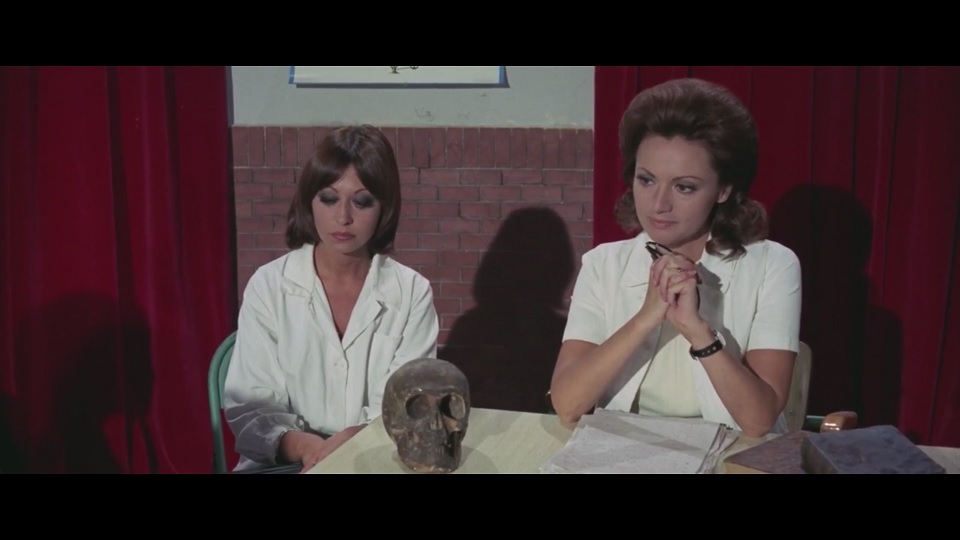
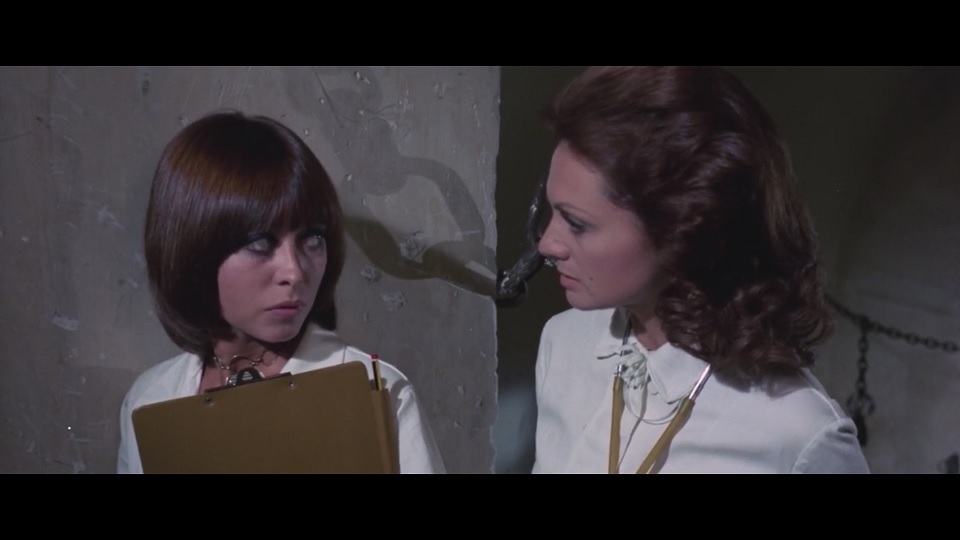
Two young college women, Elvira and Genevieve, have come to a small country village in search for the resting place of vampiric countess Wandessa de Nadasdy. There they meet the charming Waldemar Danisnky, who gladly helps them. He has a dark secret though, but once the Countess is inadvertently resurrected, his lycanthropy may be the only thing keeping the world safe from her dark power...


The Werewolf vs. the Vampire Woman (La Noche de Walpurgis, in its entirely different Spanish title) is the 5th film in Paul Naschy's Hombre Lobo series. It's not only the quintessential entry in the series, and considered to be the best, it's also responsible for igniting the next big horror boom in Spain.

It opens in a morgue with two doctors looking over the dead body of werewolf Waldemar Daninsky, and deciding to tempt fate by removing the silver bullets. Right on cue, he immediately comes back to life and slaughters them.


Following this basic and effective prologue, Waldemar has found himself back in the country, at his old family estate, soon to receive new visitors. The two women are introduced well, and quickly embark on their academic journey, which itself involves a lot of tempting fate. After some car trouble they are invited to Waldemar's castle, where they are visited by madwomen who strangle them or pull off their dresses, and find bloody chains.

At first Elvira is mistrustful of their host while Genevieve is unsuspicious, yet after these attacks and discoveries, the characters seem to switch. Suddenly it's Elvira who can't see anything wrong, while Genevieve is now the paranoid one. It seems the more evidence Elvira gets that something is wrong, the more she implicitly trusts Waldemar. Which she should, but she doesn't know that! Most amusing is Waldemar's explanation of the freshly bloody chains, that they were simply left by the house's last owner when hunting animals.


When they find the tomb of the vampire, they naturally take a peek inside (just to make sure she's there, of course). Then, not only does Genevieve pull the cross from the chest, but also manages to cut her hand, and bleed all over the vampire's mouth in the process! While the story here is otherwise good, it is a little annoying when the problems are entirely of the heroes' own making.

Wandessa quickly comes back from the grave to claim fresh victims, and Elvira learns the truth about Waldermar. He is cursed to be a werewolf, and can only be killed if a woman who loves him stabs him with the Moyenza cross. Which just so happens to be the only thing that can kill the vampire too! How convenient. Or frankly inconvenient if they only made one!
 

While basic, Werewolf vs. the Vampire Woman moves along at a quick pace, and is always entertaining. The film has a dreamlike atmosphere, feeling hazy and hallucinatory. The direction by León Klimovsky is effective not only at conveying this, but also in general as a Gothic horror. Despite the small budget there's a care and attention to detail that makes things look good, with one example being the different dresses during a fake-out dream sequence.


The cast in Werewolf vs. the Vampire Woman is surprisingly small. Waldemar Daninsky is a tortured lover once again, always depressed but still able to effortlessly charm. He was still cursed in Tibet, though not by a yeti this time. He has a sister too, who's a little bit crazy, and suffers an abrupt but expected demise.


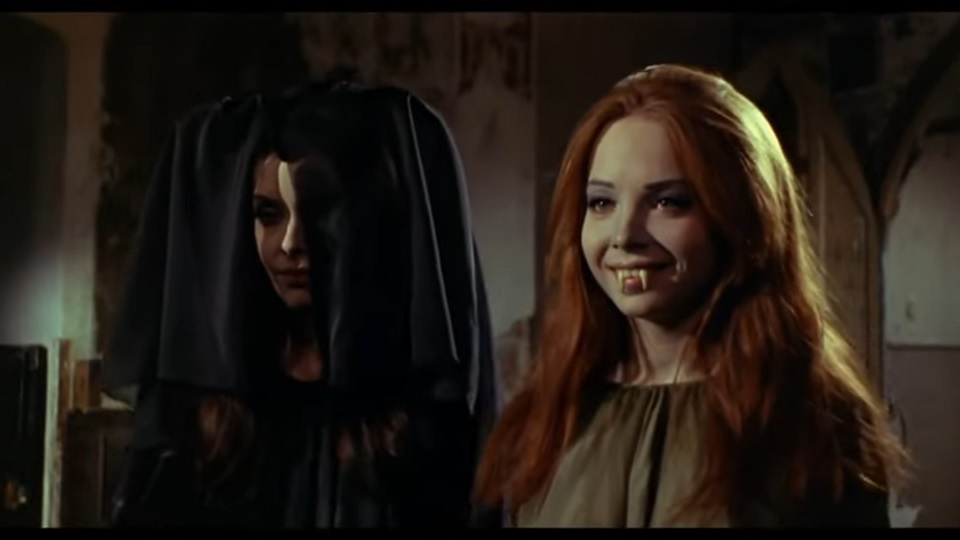
Wandessa isn't much of a villain, and I'm not sure if this is a positive or negative. Beyond her backstory, she has no actual character, or even dialogue. All she does is laugh, and glide in slow motion a lot. While this does leave something to be desired in terms of personality, it does make for an interestingly abstract villain, with a siren quality.

The lesbian subtext is portrayed interestingly here. There's no actual sex, or even nudity in that context, but the lack of direct action actually helps make it sexier.


The girls are fairly likeable, even if they can be dopes at times. Genevieve is soon turned into a vampire (yes, she does say the words "No vampire is going to suck your blood" at one point), while Elvira becomes enamoured with Waldemar, professing her love for him with hilarious suddenness.

There is one area the romance genuinely excels though. Unlike previous entries, where the girl would just forget her old boyfriend existed, then she'd be in his arms again the moment Waldemar's dead, here there is actual relationship drama. Her old beau Marcel has a bigger role, and actually plays a part while Waldemar's alive, instead of only reuniting when he's got an 'In'. He starts off as a bit of a prat but does endear himself.


The supporting cast is decent. The local villagers are naturally distrustful of Waldemar, and one in particular tries killing him, to no avail. This scene shows off a werewolf's immortality (even in human form) in an interesting way. The funniest minor player however has got to be the creepy taxi driver, who begins an increasingly unstable monologue to Elvira, and just doesn't know when to stop. What really confused me is his identity. Later on we see a hot young lady, who speaks lovingly of her handsome and loyal boyfriend Pierre...who I'm pretty sure is this pervy old driver!


The acting here is fairly decent. Paul Naschy is a good leading man, with a piecing glance. He has a nice stoicism, and is a natural as the monster. Patty Shepard is a highlight as Wandessa, and makes for a distinctive villain, even though she's mostly silent. The girls do fine jobs, with Barbara Capell making for a great vampire. Both pull of great 'screaming faces' too, which is an invaluable asset for a classic horror film. The dubbing is fine, if amusingly cheesy, like a British accent that goes in and out.

The music here is great. There are many suitably atmospheric tracks. There's also an opening and closing track that totally spoils the mood, but is such a groovy and lighthearted 70s tune that it's easily forgiven!


The effects are a highlight, for the most part. The make-up for Wandessa and the other vampires is good, even if the fangs can look slightly fake in places. We also get an undead monk in one scene (which surprisingly predates the famous Blind Dead series!). Naturally the main attraction is the werewolf, and he looks great! The first transformation doesn't show much, and the second seemed like another cop-out, but it proved to be great with one really effective cut! The remainder of the effects include a neat staking and dismemberment, and the ultimate death of Wandessa, accomplished with a neat wax melting effect!


The Werewolf vs. the Vampire Woman is a highlight of both this series, and Spanish horror. It's perfect if you want a nice simple Gothic horror to enjoy, with some classic European flavour...

Friday, July 29, 2022

El Charro de Las Calaveras (1965)


In the dusty towns of Mexico's vast countryside, innocent people are threatened by monsters. Wolf men, vampires, headless horsemen, and more! Only the Rider of the Skulls is a match for these terrible creatures of the night, and sure as sombreros are round, he will pledge his life to doing battle with them...


El Charro de Las Calaveras (translating to Rider of the Skulls) is an interesting artifact from 1960s Mexico. The first notable thing is its genre. It's a horror themed western, which makes it a unique experience (unless these are dime a dozen in Mexico, in which case it's your average western). And like all Latin westerns, it serenades us with some Mariachi players as the movie begins.


Second is the film's structure. I'm not 100% sure on the details. El Charro was either originally a prospective TV series that got edited into a movie, or began life as it is, with the intention of kickstarting a series. Either way, you can tell it's not your average film. There are three distinct stories, each running at about 26 minutes.


Each segment begins the same, showcasing the new threat, and who it threatens. If this is all set in the same place, you wonder how there's a town left if at least 1 person dies each 'episode'! There is a lot of variety, and not just in the main three monsters. The first town is threatened by a werewolf, and El Charro must discover the monster's human identity before it's too late for a local family.

There is also a witch present. At first I thought she was a villain, and was orchestrating all these threats. But it turns out she's a more neutral figure.She doesn't exactly seem good per se, but she helps El Charro out. Specifically, by raising the dead to give him clues!


Next is a vampire, who kills a woman's father, then sets his fangs on her, seeking a new partner to spend his undead days with.

Last is a headless horseman roaming the land, searching for his lost head, which is inherited by a local woman. While El Charro attempts to fight off the horseman (apparently not having realised bullets have no effect on monsters), the woman tries to dispose of the macabre object, eventually leaving it in the care of one Don Lupe, which promptly gets him killed. Now the horseman has his head back, and aided by a mysterious group of skull-faced priests, he begins a terrible plan.


The stories in El Charro are fairly simple and to the point. The first two are very nearly copies of one another, following the same beats, but with enough different. The third stands out a bit, through a different structure, and a more packed plot. There's almost a little too much going on for one short 'episode', and it risks being a little confusing. But if nothing else, it is a fun way to end the movie! Cowboy vs undead swordfights are always needed! There is a slightly abrupt ending, but satisfying, and ends with one more Mariachi reprisal.


The setting appears to be the old west, until about an hour in, when we suddenly see cars, telephones, and a modern city, showing that this is set in the present day.

El Charro is a fairly cheap production, but as a western it's hardly a tall order. All you need are a couple of horses, some sombreros, and in this case some papier mache masks. The monsters all look fun. Often cheesy and hilarious, but fun to look at, and creatively designed.


The wolf man is probably the best, and has a very creative (if baffling) transformation! The vampire's mask is the least convincing, but has adorable giant bat ears! The headless horseman is true to his name, which can only mean one thing. That poor actor! In a Hollywood film you would presume a mix of stuntwork and clever effects would pull off the visual of a headless rider. In Mexico? Just hide the dude's head, pat the horse on the backside, and watch him go!


El Charro looks quite good. I like how it uses black against light backgrounds, and the film has a striking palette in black-and-white, and no doubt would have been in colour too. A lot of the film is actually supposed to take place at night (indeed, most of the enemies here are allergic to sunlight), but every scene is clearly shot at daylight. This leads to a lot of unintentional hilarity. It's just so brazen that in a movie supposed to take place at night, there's not even the slightest effort.


The hero has a great costume. I love the amount of skulls! More than you ordinarily expect heroes to wear. That's Mexico for you! Good guys wear black, and skulls! There's one hilarious moment where some villains try and garotte El Charro from behind, despite him wearing the widest sombrero on earth.


The film is full of lovely ladies, each serving much the same purpose. The first is the mother (sister?) of a friendly boy. It's up to El Charro to save her, but despite his best efforts she is killed by a wolfman. Second up is the woman the vampire fancies. I did wonder if her curse would be lifted when the vampire was staked, but then the segment ended with what I presume is the Spanish for "Though she may be dead, her soul is free". Luckily El Charro does eventually ends the movie with a surviving love interest.


'Aiding' the Charro is the portly comic relief sidekick Cleofas. El Charro gains a pint-sized sidekick in the first story. He seemed to return in the next two parts, but apparently it's a different boy. I thought he looked different, and seemed related to the second woman, but I thought nothing of it. Goes to show how interchangeable they are.


The acting is fine for what it is. I was impressed by how little we see lead actor Dagoberto Rodriguez's face! I suppose it shouldn't surprise me too much, since this is Mexico, land of the luchadors. Pascual García Peña is amusing and visually distinct as Cleofas. The actors playing the monsters all do well under their masks. Lastly, the kids are fine, as are the women, with their sometimes bouffant hair.


El Charro de las Calaveras is a great time! Short and to-the-point, it's a great throwback to classic western TV, with a bit of horror and monsters thrown in for good measure. It's the kind of film that could only come from Mexico, and shows why they have such a vibrant and colourful cinema. Even their z-grade efforts are something special...